MOT
For all Class IV vehicles
Total Car Care have invested in the very latest MOT bay in and around Daventry so you can now see on our large screens just how your car is getting on during the test. With a viewing area with seats you can wait the short time it takes us to do all the checks required to say your car is safe for the road.
Our MOT Bay
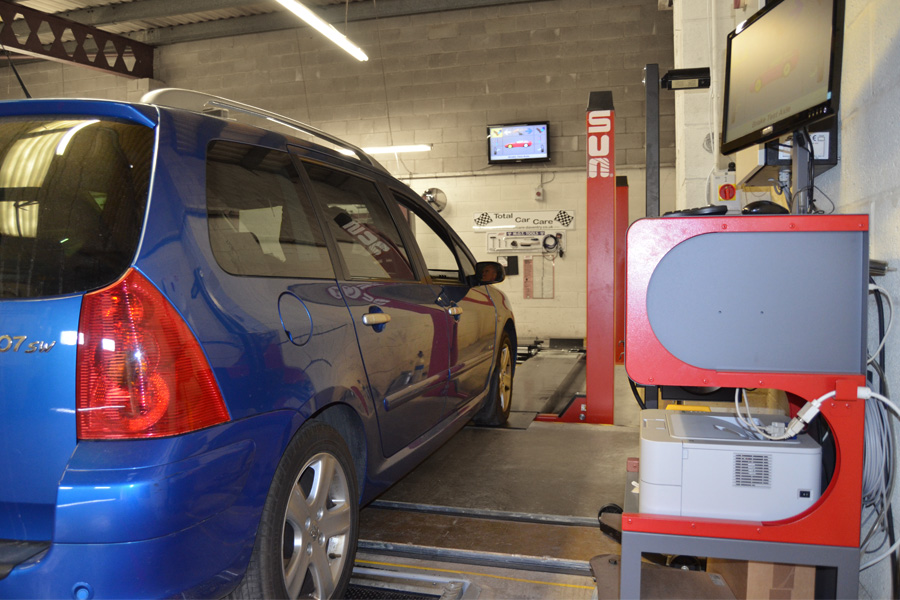
MOT test in progress
From the brake test front and rear to lights, safety belts and emissions testing our new MOT means you will get a quick and fair test result everytime. You may want to look at this website for a list of the typical kinds of MOT failures that your vehicle has. Click here to open website in new window. Just select your make and model to find out more. Of course we'd be delighted to fix all the faults for you after the test failure or indeed avoid them by servicing your car ahead of the test.
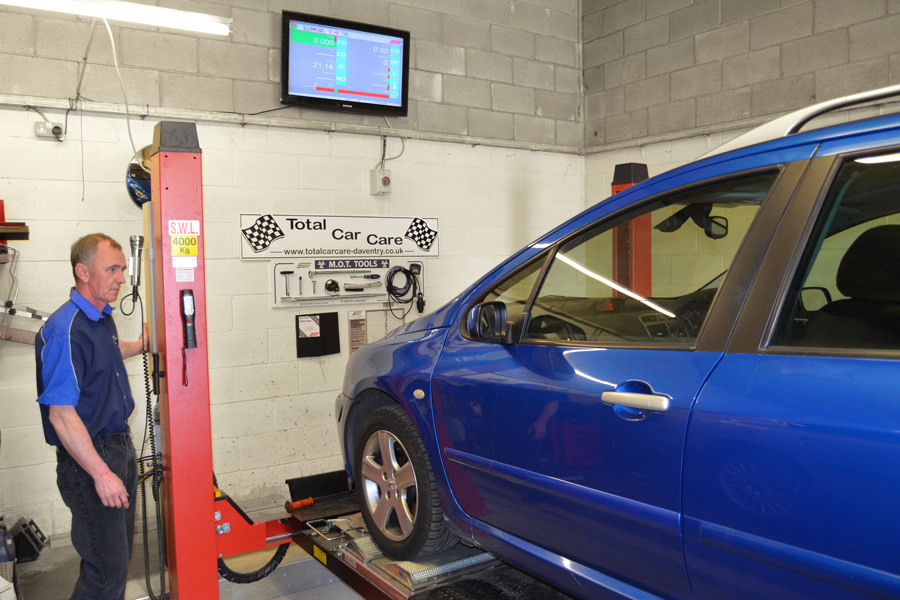
Advice given
Our experience will allow us to advise you on any failures you may have and of course we'd be delighted to carry out the work required before our free re-test (within 10 days). We realise that some people advise you to get the work undertaken somewhere else but we are proud of the number of our regular customers who recognise our honesty and fair play and have both test and any failure work done by us.